
How Much Does an Interior Designer Cost in Australia? Understanding the Value Behind the Investment
Before You Ask What It Costs, Ask What It Saves
Key takeaways
- Interior design fees are usually fixed, hourly, a percentage of project cost, or a mix of these.
- A designer’s fee is easy to see. The cost of avoidable mistakes is scattered through a project and often appears too late.
- Not every project will cost less with a designer, but more of the money you spend can end up in the finished home.
- The earlier a designer is involved, the more of the budget their advice can influence.
- Established relationships with builders and project partners can make quoting and construction clearer and better coordinated.
Is hiring an interior designer worth it?
An interior designer’s fee appears on your budget from day one. The cost of not having one rarely does. It arrives later, as a wall moved after it was framed, a stone that no longer suits the budget, or a sofa that never quite fits the room.
That’s why design fees can look like an extra expense while the alternative looks free. For most homeowners, a better question is this: how much could you actually save by working with an interior designer instead of managing the project yourself?
There’s no honest single figure, and you won’t find a price list here. Two homes of the same size can need very different services, so a number without a scope tells you very little. Some projects won’t cost less overall. Many clients reinvest what careful planning frees up. What changes is how decisions get made, how many preventable costs are avoided, and how much of your money ends up in the home you live in.
What does an interior designer actually do?
An interior designer plans how a home will work, look and be built, then helps carry that plan through construction. The furniture and finishes are the visible part. Much of the value comes from the thinking and documentation behind them.
A full-service engagement, such as our own process, typically includes:
- Discovery and budgeting. Establishing goals, scope and realistic construction and project budgets.
- Concept design. Mood boards, initial floor plans and sketches that test the direction early.
- Design development. Detailed floor plans that optimise space and function, with compliance checks.
- Documentation. Plans for council or certifier approval, then construction documents and a catalogue of fittings and fixtures showing how each element should be built.
- Builder selection. Builder introductions and reviews of construction quotes.
- Construction support. Protecting the design intent and helping to solve issues that arise mid-build.
- Selections and styling. Colours, materials, fixtures, furniture and the final installation, where it all comes together.
Not every project needs every stage, and not every designer offers them all. Comparing fees only makes sense once you’re comparing the same scope.
Interior designer vs interior decorator: what’s the difference?
An interior designer typically shapes how a space is planned and built. An interior decorator typically styles a space that already exists. Both are valuable, and the right choice depends on what your home needs.
| Interior designer | Interior decorator | |
|---|---|---|
| Focus | Layout, function, joinery, lighting and materials | Colour, furniture, soft furnishings and accessories |
| Best for | Renovations, new builds and spatial changes | Refreshing a home without building work |
| When they join | Ideally at the planning stage | Often once the structure and finishes are set |
| Documentation | Detailed drawings and schedules for trades | Mood boards, product selections and placement plans |
| Project team | Works with builders, architects and consultants | Works mostly with suppliers and installers |
These titles are used loosely. “Interior designer” isn’t a regulated title in NSW, so look past the label and ask about experience, completed projects and the exact scope of the service. Depending on your project, you may also need an architect, building designer, engineer or certifier.
Where does your interior design budget go?
The design fee is only one line in a project budget, yet it influences decisions across every other line. Before comparing fees or finishes, map the whole picture so nothing important is discovered late.
| Budget area | What it can include | Why plan it early |
|---|---|---|
| Design and consultants | Interior design, architecture or building design, engineering and surveying | Sets the scope everything else is priced against |
| Approvals | Development Application (DA) or Complying Development Certificate (CDC) costs and certification | Can affect both design options and your timeline |
| Construction | Builder, trades, structural work and services | Usually the largest cost, and the hardest to change later |
| Fixed selections | Joinery, stone, tiles, tapware, appliances and lighting | Affects drawings, quotes and lead times |
| Furniture and art | Furniture, window furnishings, rugs, art and styling | Often left until last, when the money has already gone |
| Outdoors | Landscaping, terraces, pools and outdoor furniture | Easy to underestimate and frequently cut at the end |
| Contingency and living costs | Unforeseen work, moving, storage and temporary accommodation | Gives the project room to absorb surprises |
This is why budgeting sits at the start of our process, ahead of concept design. A design can only be judged properly against the money available to build it.
Can an interior designer actually save you money?
An interior designer can save you money by preventing costly mistakes and helping you spend with more certainty, although that doesn’t always mean a lower total. The saving usually comes from costs that never happen, which is why it’s so easy to overlook.
| Preventable cost | How it happens | How planning helps |
|---|---|---|
| Changes on site | Layout problems surface once walls and services are in place | Layouts are resolved on paper, when a change costs a line on a drawing |
| Variations | Gaps in the drawings leave details to be priced and decided mid-build | Detailed documentation and schedules define the work upfront |
| Quotes you can’t compare | Builders price different assumptions and allowances | Builders quote from the same documents, and quotes are reviewed against them |
| Late selections | Items are chosen under pressure, or arrive after they’re needed | Selections are scheduled against the budget and programme |
| Unsuitable purchases | Furniture or fittings don’t suit the space, or each other | Items are planned together, to scale, from the floor plan |
| Short-lived choices | Fixed finishes follow a trend and date quickly | Budget favours timeless materials and details that age well |
How to estimate what a designer could save you
You won’t get a guaranteed number, but you can test the value for your own project. Add up these four things and weigh them against the design fee:
- The cost of avoidable change. What would it cost if a key layout, joinery or finish decision had to be redone?
- The value of your time. How many hours would research, sourcing, meetings and site decisions take from your work and family?
- The cost of delay. What does each extra week cost in rent, storage or disruption?
- The value of the result. How much is a better-planned home worth to you, every day you live in it?
Is DIY really cheaper than hiring a designer?
DIY has a lower upfront cost, but it isn’t always cheaper once time, trial and error, and mistakes are counted. For a coat of paint and some new furniture, doing it yourself can be a great choice. The equation changes when walls, plumbing, joinery and multiple trades are involved, because you become the designer, the researcher and often the coordinator.
| Managing it yourself | Designer-led | |
|---|---|---|
| Upfront cost | No design fee | A design fee, agreed against a defined scope |
| Your time | Research, sourcing and decisions fall to you | Options are curated, so you make fewer, clearer decisions |
| Experimentation | Samples, returns and second attempts are part of the learning | Choices draw on experience of what works together |
| Builder communication | Details may be explained verbally or decided on site | Documentation sets out what is to be built |
| Cohesion | Easy to end up with a collection of separate decisions | Planned as one whole, room to room |
There’s a quieter cost too: decision fatigue. A renovation can involve hundreds of choices, and the last ones often get the least attention, even though they are lived with every day.
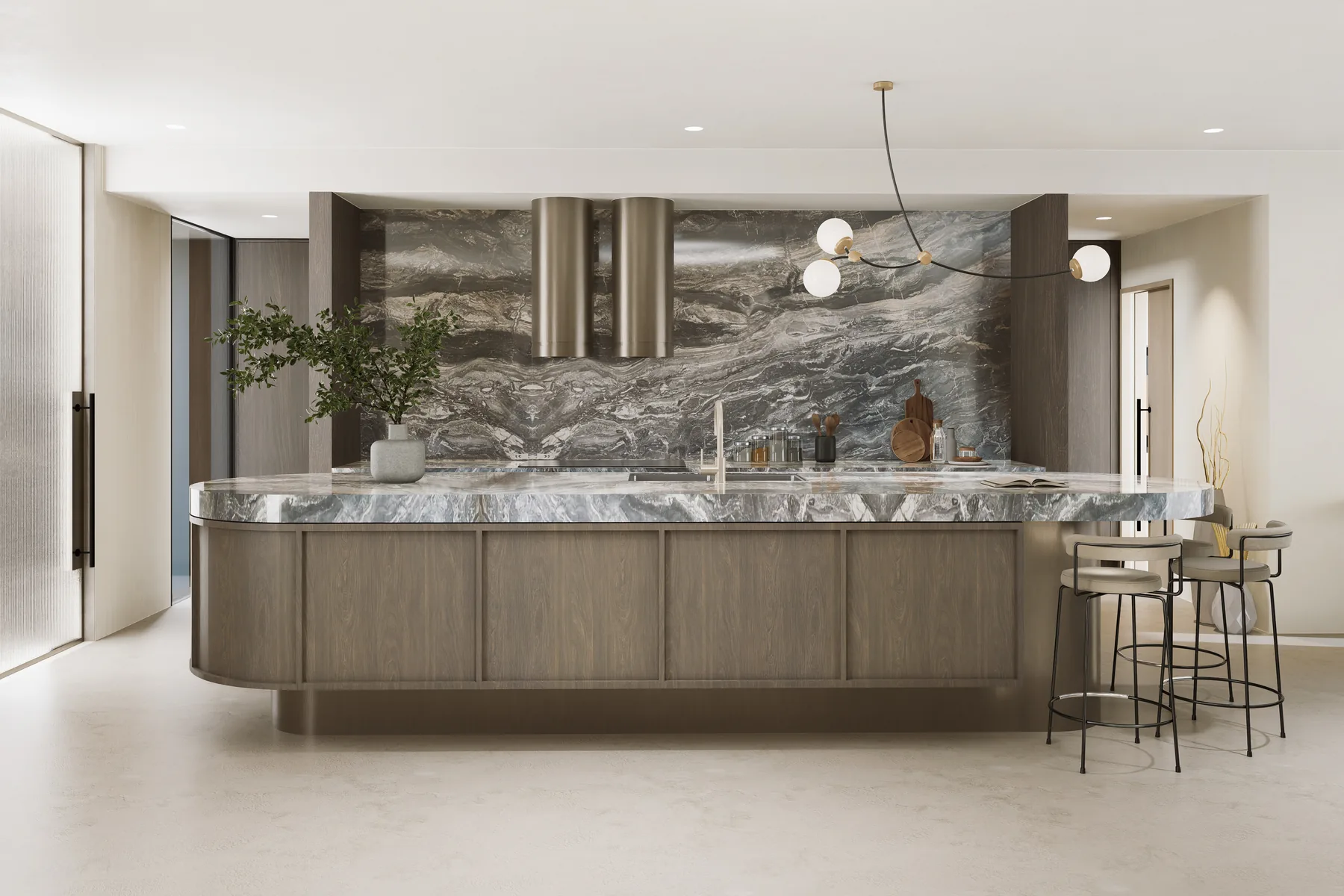
How to get more out of your interior design budget
- Engage a designer early. Do it while plans are still flexible, and well before you buy any appliances or fittings.
- Budget for the whole project. Include consultants, approvals, furniture, outdoor areas, contingency and living costs.
- Rank your priorities. Decide what matters most before you start, so any trade-offs are deliberate.
- Spend on what’s hard to change. Layout, joinery, stone, flooring and lighting are far harder to replace than a cushion or a side table.
- Work with what you have. Where a layout works, keeping existing structure and services can free up money for other priorities. Keep the furniture and art you love, too.
- Finalise selections before construction. Decisions made early can be scheduled, priced and ordered with far less pressure.
- Get quotes from complete documentation. The more clearly the work is defined, the easier quotes are to compare.
- Avoid changing course mid-build. Keep a contingency for true surprises, not for second thoughts.
- Consider staging the work. A well-planned project can sometimes be completed in phases, so nothing done now has to be undone later.
What can your budget achieve?
Every budget is a balance of scope, quality and time. Asking “what can we do for this amount?” is often more productive than asking “what does this cost?”, because a good design response starts with priorities.
- Furniture, art and styling. Transforms how a home feels without building work. See our furniture, art and styling service.
- Selected rooms. Focuses on the spaces that affect daily life most, such as the kitchen, bathrooms or main living area.
- A full renovation. Reworks how the whole home functions, and how each space connects to the next.
- A new build. Offers the greatest control over layout, light and detail, and benefits most from early design input. See renovations and new homes.
Where to invest and where to hold back
| Invest first | Can often wait, or be simplified |
|---|---|
| The layout and how the home flows | Decorative accessories and small objects |
| Joinery, stone and flooring | Secondary rooms that can be completed in a later stage |
| Lighting and power planning | Statement furniture and art that can be collected over time |
| Tapware and hardware you touch every day | Finishes in low-use areas |
The best split is personal. For one family, a generous kitchen is the priority. For another, it’s the main bedroom or the connection to the garden. Good planning puts your money where it will matter most to you.
Why working with an experienced interior design studio matters
Experience is most valuable when a project stops going to plan, and most projects will surprise you at some stage. An established studio has seen many of these problems before and has people to call when they appear.
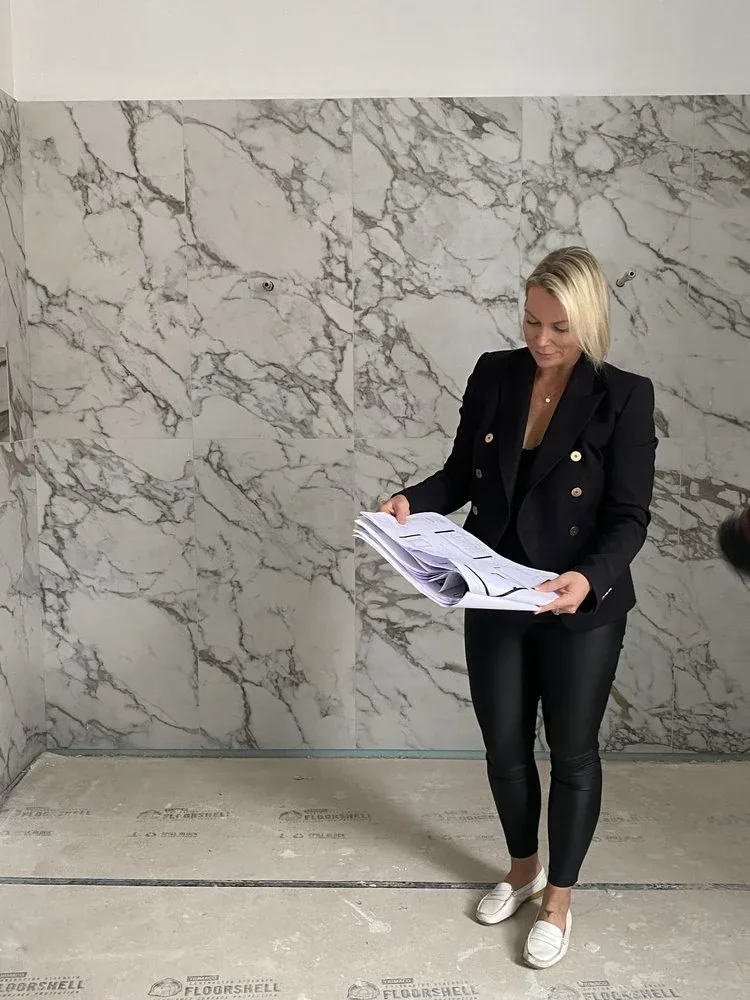
At STUDIO BELLE, that experience shows up in a few practical ways:
- Relationships across the industry. We’ve built strong relationships with Sydney’s finest builders, architects and landscapers. Because we know how they work, we can introduce people suited to your project and keep design and construction closely connected as we bring the vision to life.
- Clearer builder quotes. Our documentation helps builders quote with ease, and we review construction quotes against it, so you can see what’s included before you commit.
- A process from start to finish. Our process covers everything from discovery and budgeting to documentation, construction support, furniture and final styling.
- Support during the build. We stay involved alongside the build team, protecting the integrity of the design and helping to solve issues that arise mid-build.
- Hands-on property experience. Our founder, Sarah Comerford, comes from a construction management background and has a portfolio of renovated and sold luxury homes. That perspective shapes how we think about buildability and long-term value.
You can see the results in our work and in our press features. We work mainly across Sydney’s North Shore and Eastern Suburbs, from The North Studio in Artarmon and The East Studio in Double Bay.
What to look for when choosing an interior design studio
The lowest fee and the best value aren’t always the same thing. Use these questions to compare studios on what matters:
- Relevant experience. Have they completed projects of a similar type, scale and complexity? Can they show finished homes?
- A clear scope. What exactly is included at each stage, and what isn’t?
- A transparent fee. How are fees structured, what counts as an extra, and how are changes handled?
- Budget discipline. How will they set a realistic budget and keep design decisions aligned with it?
- Documentation. How detailed are their drawings and schedules, and can a builder quote from them?
- Project partners. Do they have working relationships with builders and consultants? Will they help review quotes?
- Construction involvement. Will they stay involved during the build, and in what capacity?
- Purchasing. How are furniture and materials sourced and ordered, and how is any trade pricing handled?
- Personal fit. A major project can take a long time. Do they listen, and do you trust their judgement?
Is hiring an interior designer worth the investment?
For a renovation or new build, an interior designer is often worth the investment because the fee can improve how the rest of your budget is spent. You gain a clearer plan, fewer avoidable mistakes, more of your own time and a home that works as one considered whole. For a simple cosmetic refresh, you may need much less help, and a good studio will tell you so.
Your home is likely one of your largest investments, and it’s the one you live inside every day. If you’re planning a project in Sydney, we’d love to talk through your goals, explore what your home could become and show you how we plan and protect your budget. Book a complimentary discovery call or tell us about your project.
Share this article