15 Elements That Make a Home Look and Feel Expensive and Luxurious
Luxury Is Felt Before It’s Seen
Key takeaways
- Expensive-looking homes are built on proportion, light and materials before furniture.
- Natural materials such as stone, timber and living metals add depth, and most of them age gracefully.
- The details you touch every day, from door handles to tapware, shape how a home feels.
- Restraint matters. Fewer, better choices read as more luxurious than many competing ones.
- Some of the most effective changes, like lighting, curtains and rugs, need no building work at all.
Why some homes simply feel expensive
You’ve probably walked into a home and sensed it straight away. The room feels calm. The light is soft. The door closes with a quiet, solid sound. Nothing is shouting, yet everything feels right.
That feeling is rarely about a single designer sofa or a famous light. It comes from a set of decisions that work together, many of them made long before the furniture arrives. Some are about how a home looks. Just as many are about how it feels: underfoot, in your hand, and in the quiet of a well-planned room.
Here are the 15 elements we rely on at STUDIO BELLE, grouped from the bones of a home through to the finishing touches. Each one comes with a simple way to put it into practice.
Architecture and light
1. Generous proportions
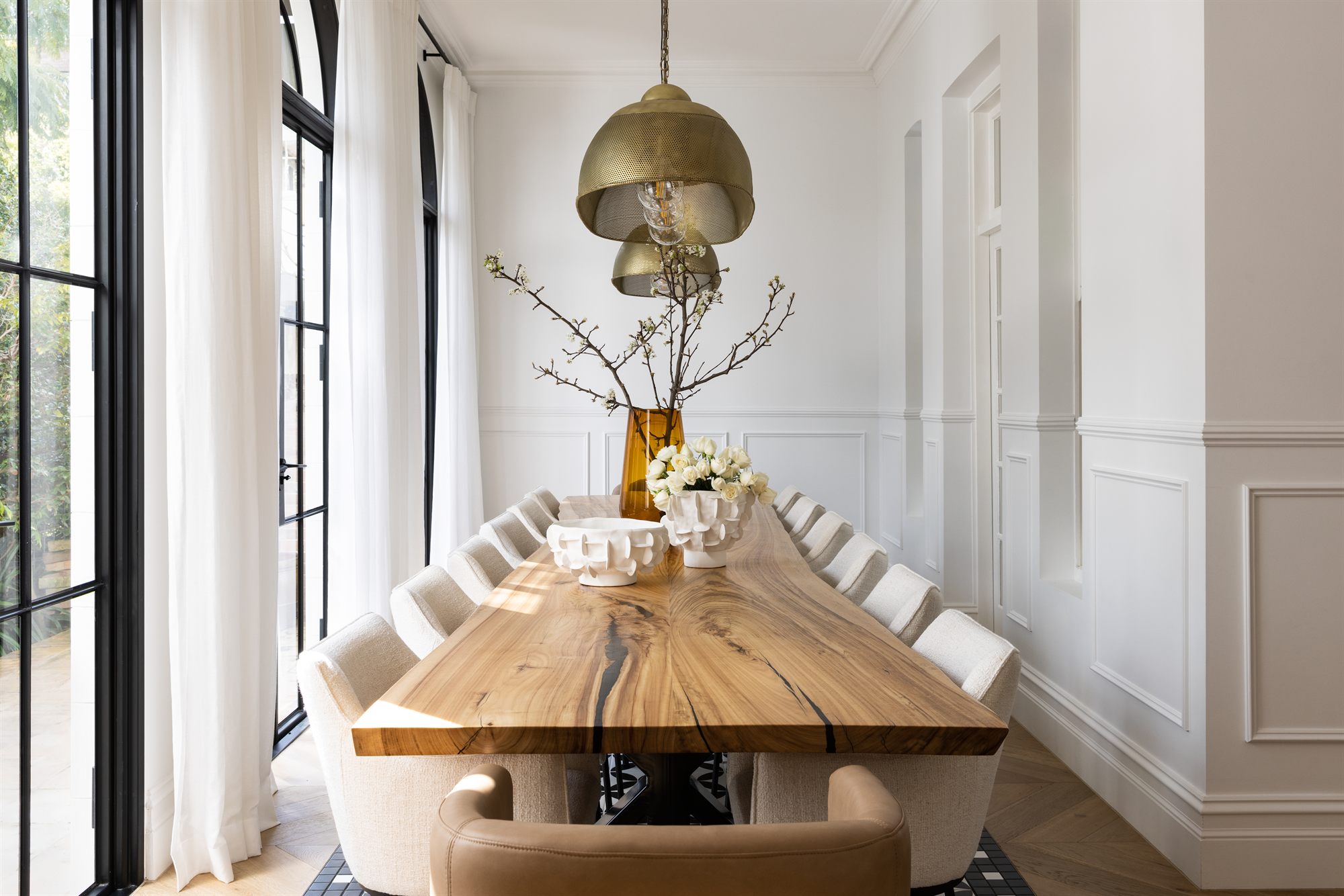
Height, width and breathing room are the first things the eye reads as quality. Tall doors, deep window reveals, generous openings and ceilings that feel unhurried make a home feel substantial before anything else is noticed.
You can’t always raise a ceiling, but you can help a room feel taller. Floor-to-ceiling joinery, full-height curtains and doors that run closer to the ceiling all draw the eye upwards.
Try this: hang curtains from just below the ceiling or cornice, not just above the window frame.
2. Natural light, softly managed
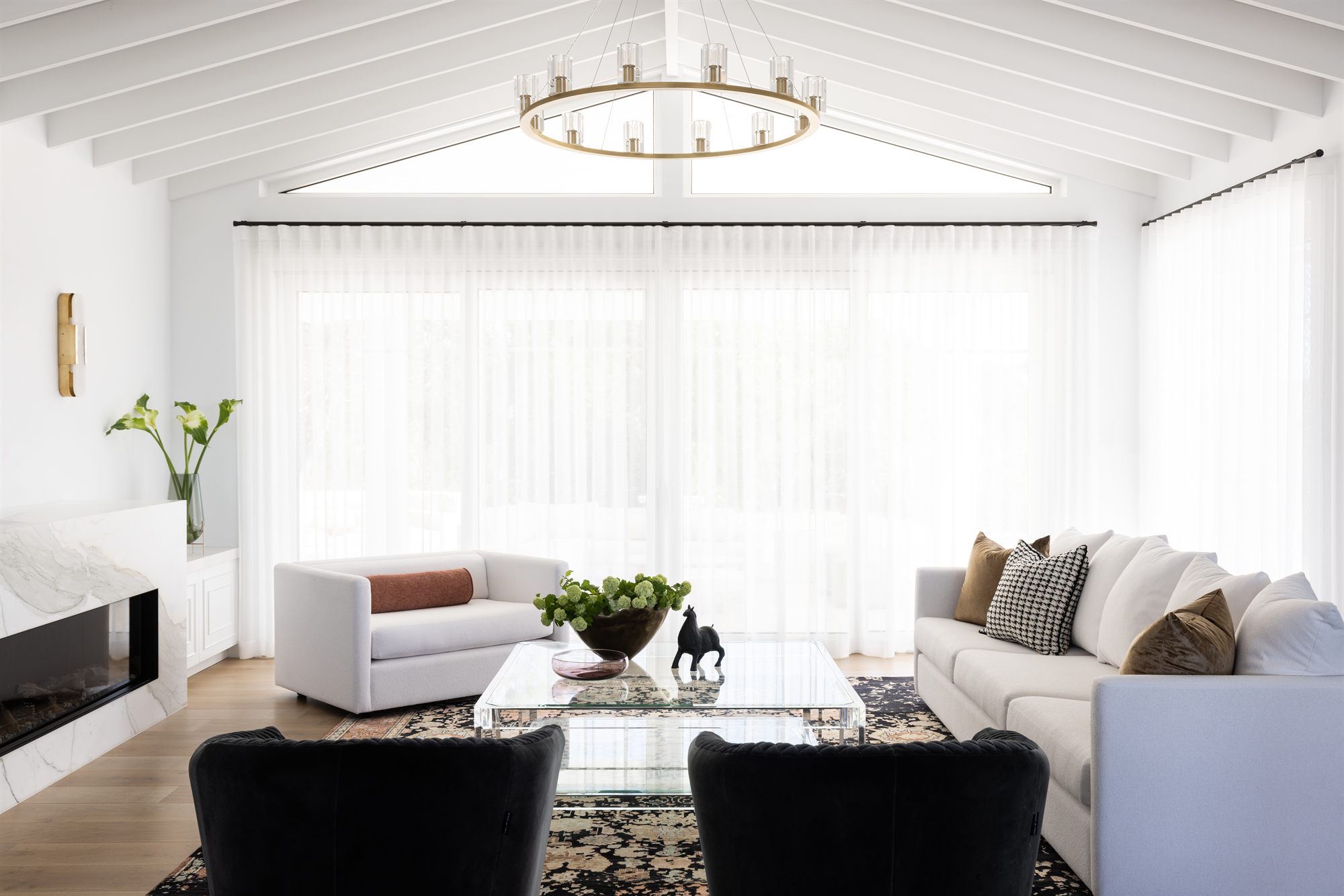
Light is the most luxurious material in any home, and how it’s filtered matters as much as how much there is. Sheer linen curtains soften Sydney’s strong light, add movement and hide less attractive views, while blockout layers take care of privacy and sleep.
Try this: choose sheers that pool just at the floor and run wider than the window, so they frame the glass rather than covering it.
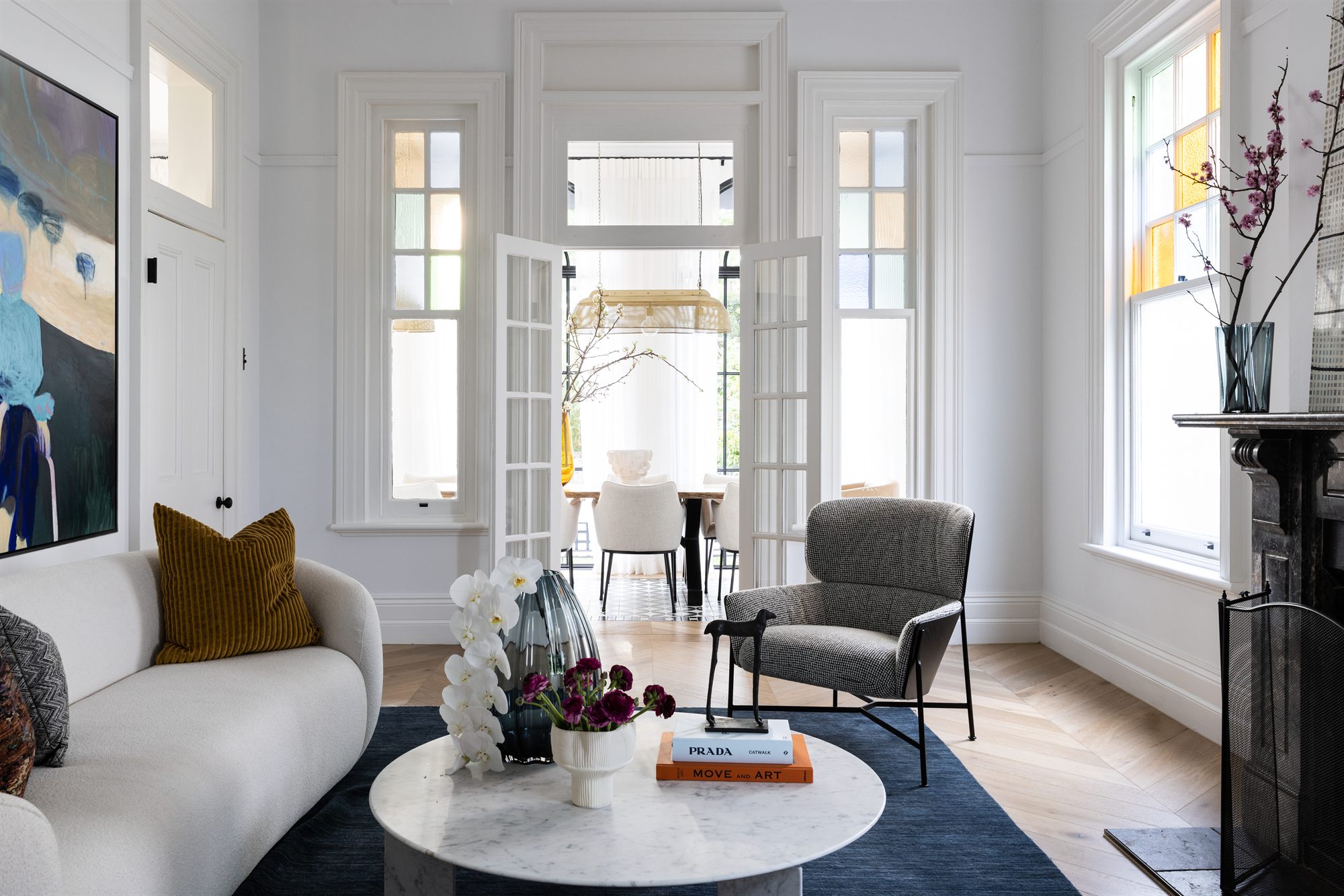
3. Layered lighting
A single grid of downlights flattens even the most beautiful room. Expensive-feeling homes combine soft ambient light with task lighting where you work and accent light from wall lights, lamps, picture lights and lit joinery. Warm colour temperatures and dimmers do the rest.
For more on getting this right, see our guide to designing a timeless and sophisticated home.
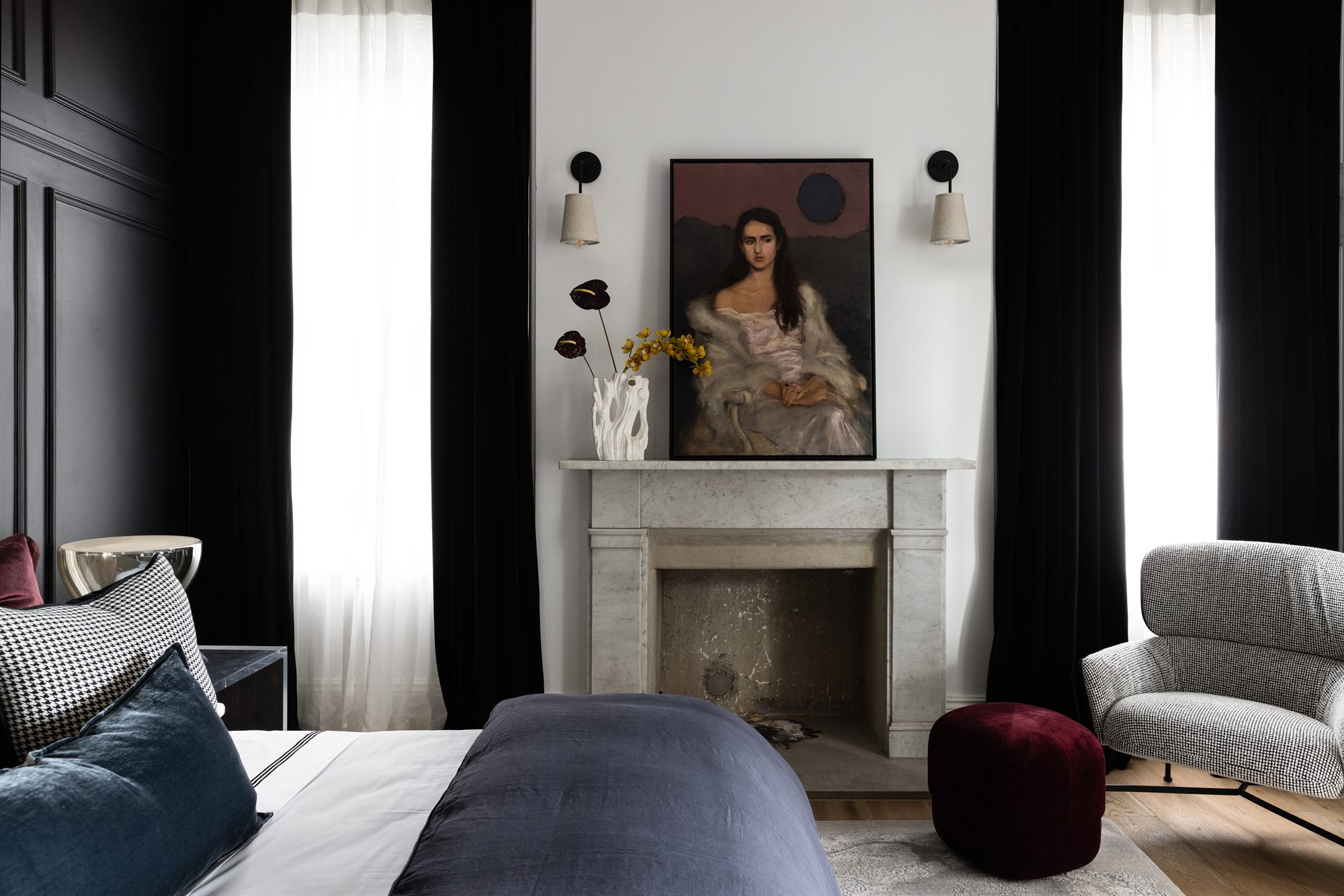
Try this: switch off the ceiling lights one evening and light the room with lamps alone. Notice how different it feels.
4. A plan that flows, and a memorable entry
Good flow is invisible, which is exactly why it feels luxurious. Clear circulation, sightlines that end in something worth looking at, and rooms that open naturally into one another make a home feel effortless to live in.
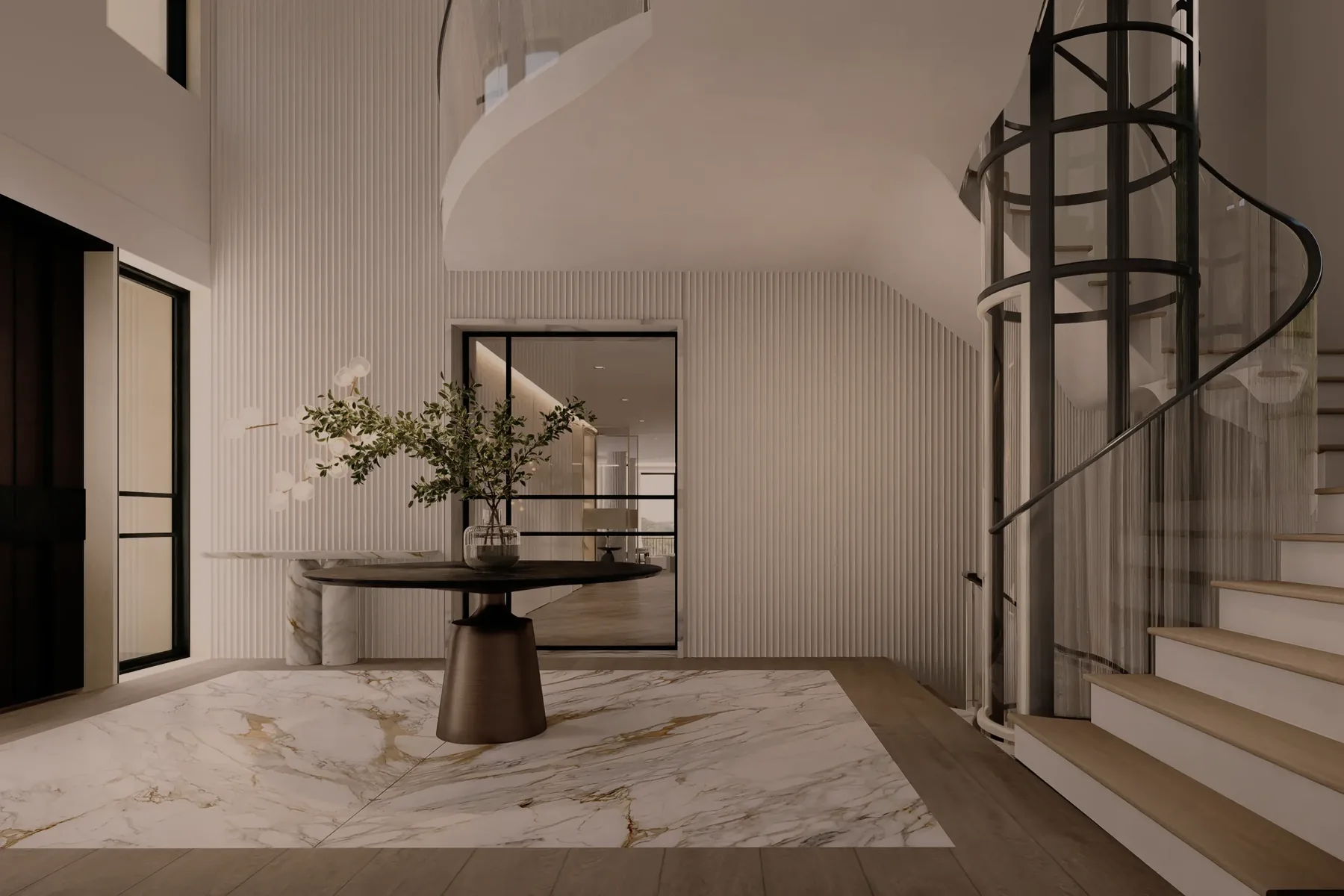
The entry deserves special attention. It’s the first impression of your home, and it sets the tone for every room beyond it.
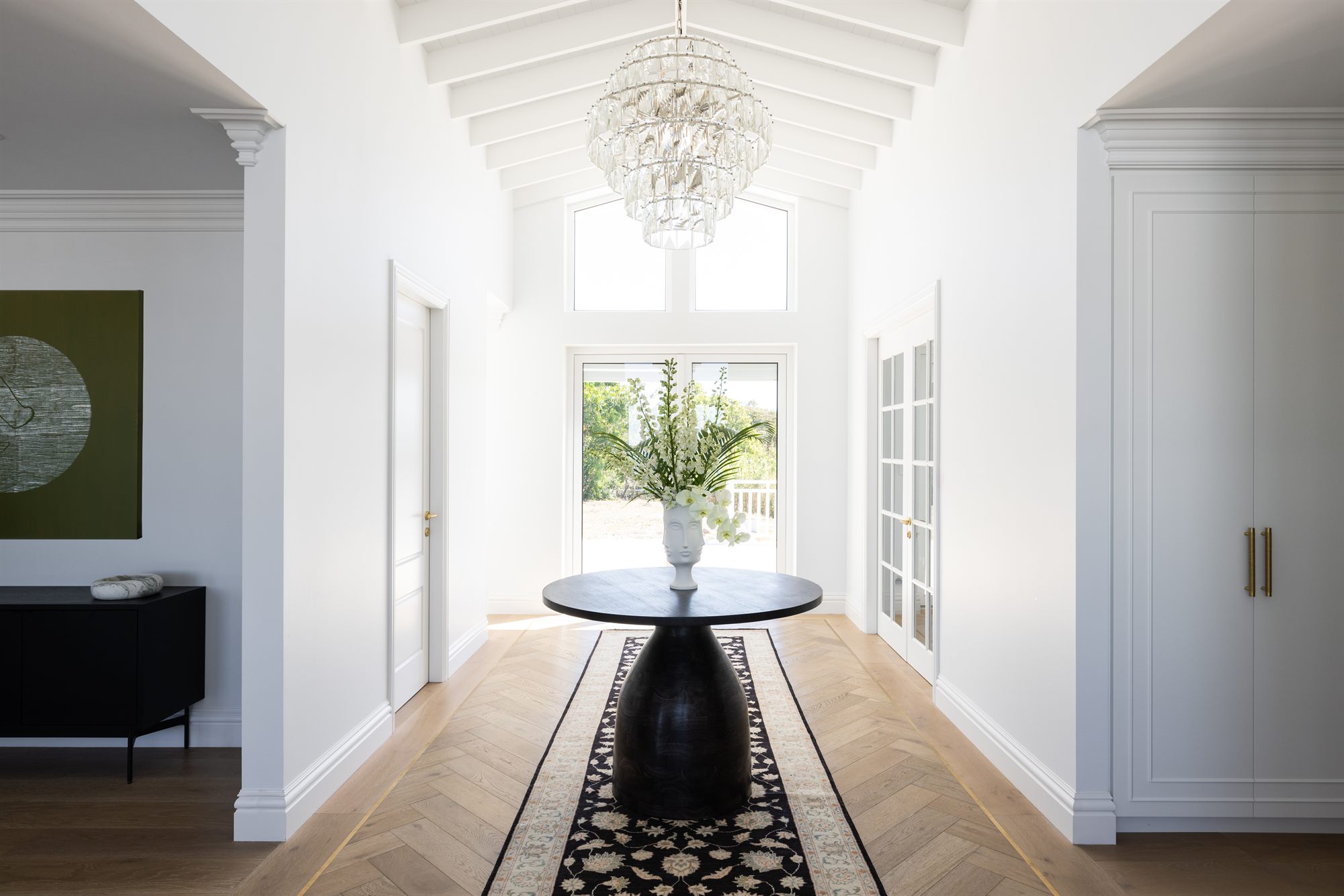
Try this: stand at your front door and look in. Make sure the first thing you see is something beautiful, such as a piece of art, a window or a styled table.
Materials and finishes
5. Natural stone, used generously
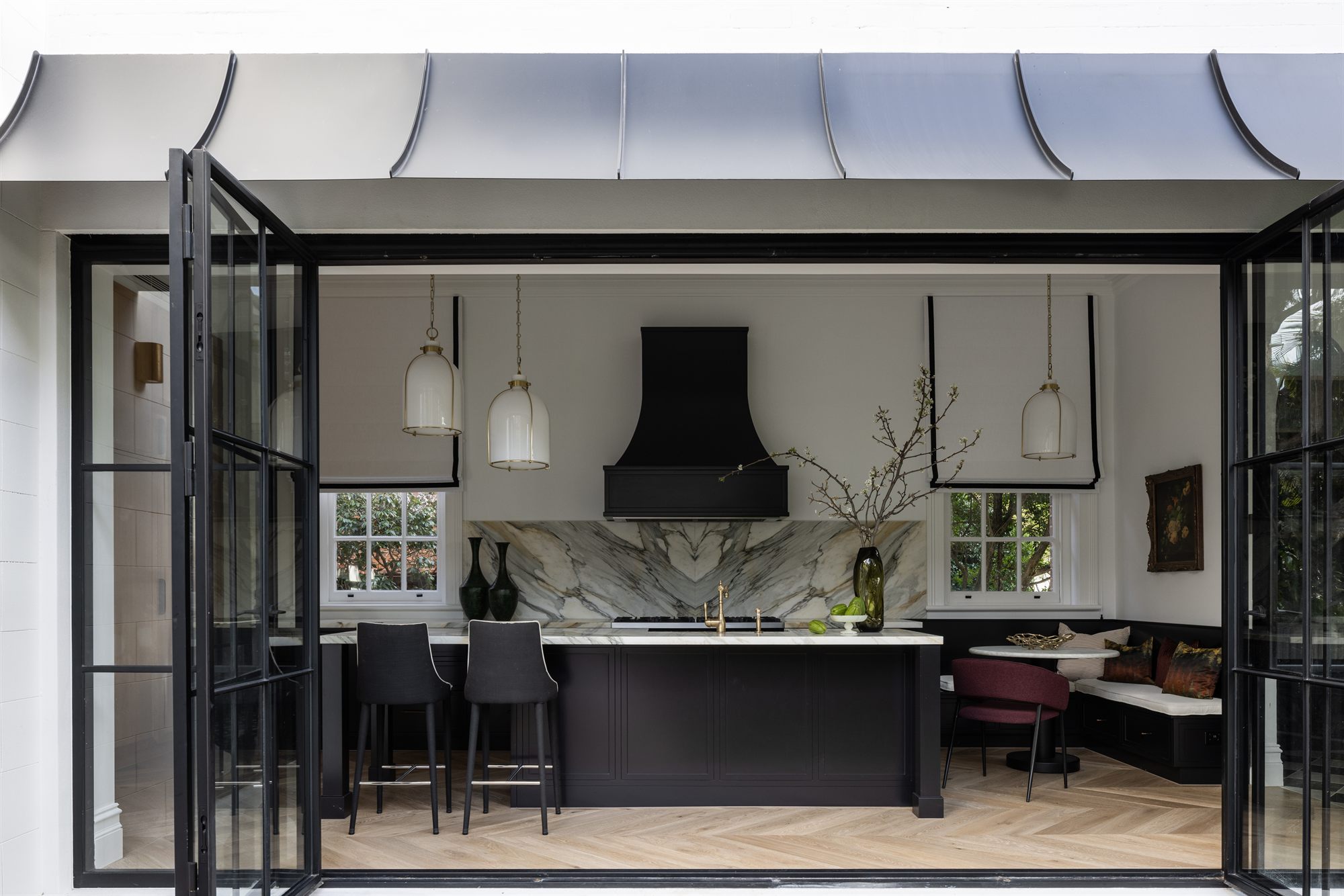
Stone looks most expensive when it’s used with confidence. A full-height splashback or a bookmatched slab, where the veining mirrors across the join, has far more presence than a narrow strip. Natural stone has a depth that printed surfaces can’t quite match, and it softens with age rather than simply wearing.
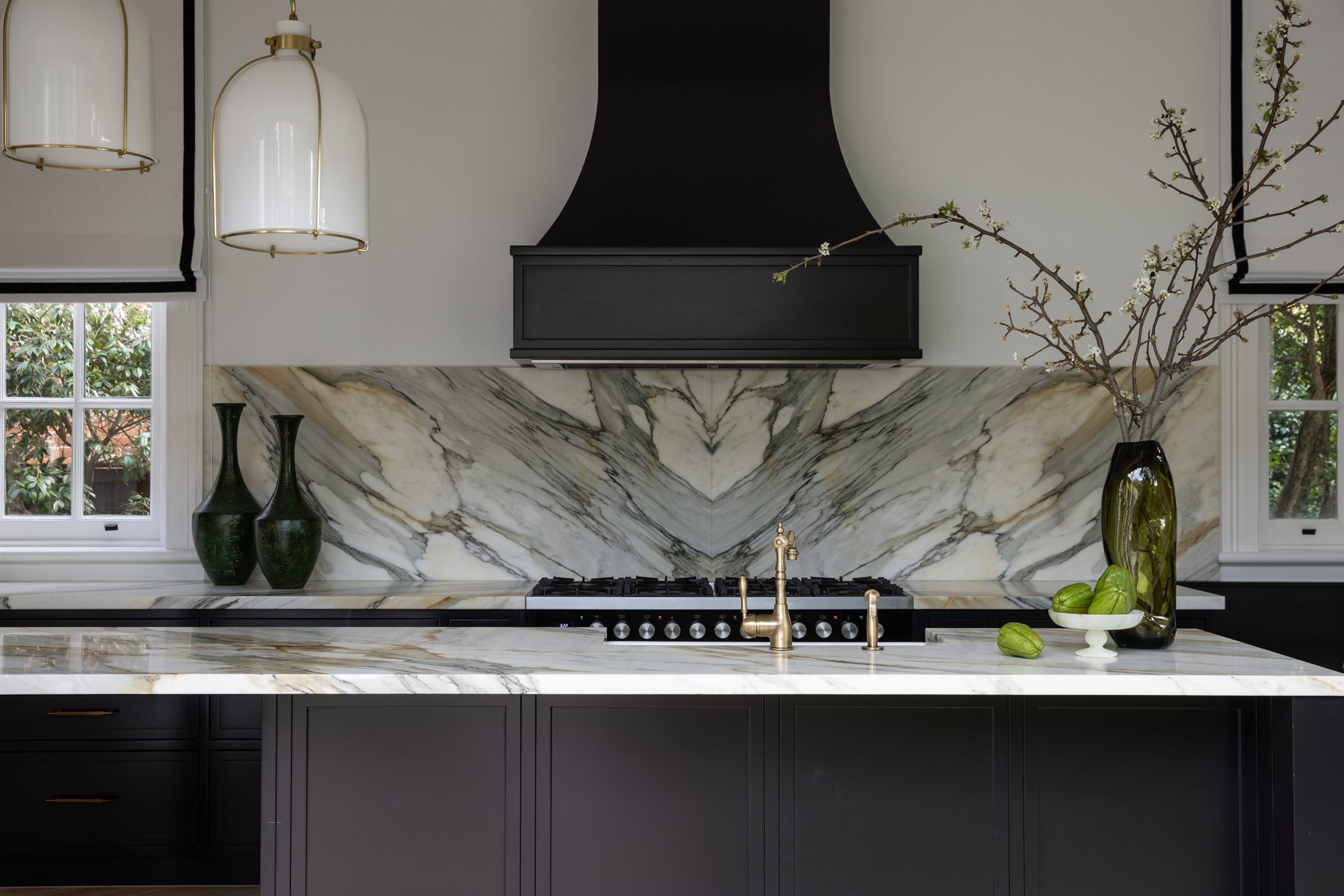
Try this: choose one stone to star in each space and keep everything around it quieter.
6. Real timber underfoot
Floors cover more of your home than any other finish, so they shape how every room feels. Timber in wide boards or a herringbone or chevron pattern brings warmth and rhythm, and running it continuously through the living areas makes a home feel larger and more cohesive.
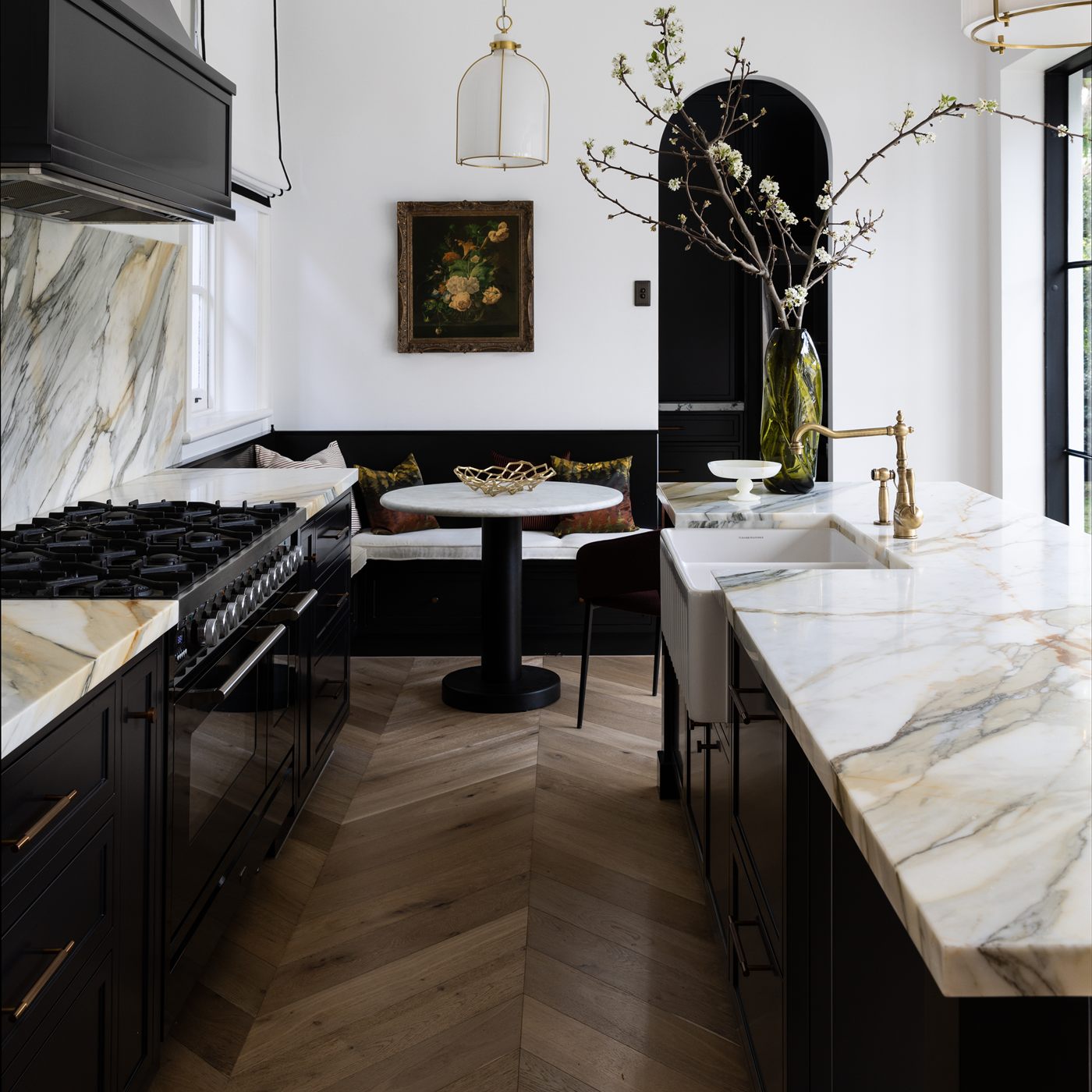
Try this: limit changes in flooring. Fewer transitions read as more expensive.
7. Living metals and quality tapware
Unlacquered brass, bronze and other living finishes develop a soft patina that only time can create. Paired with well-made tapware, they turn an everyday basin into something you enjoy using.
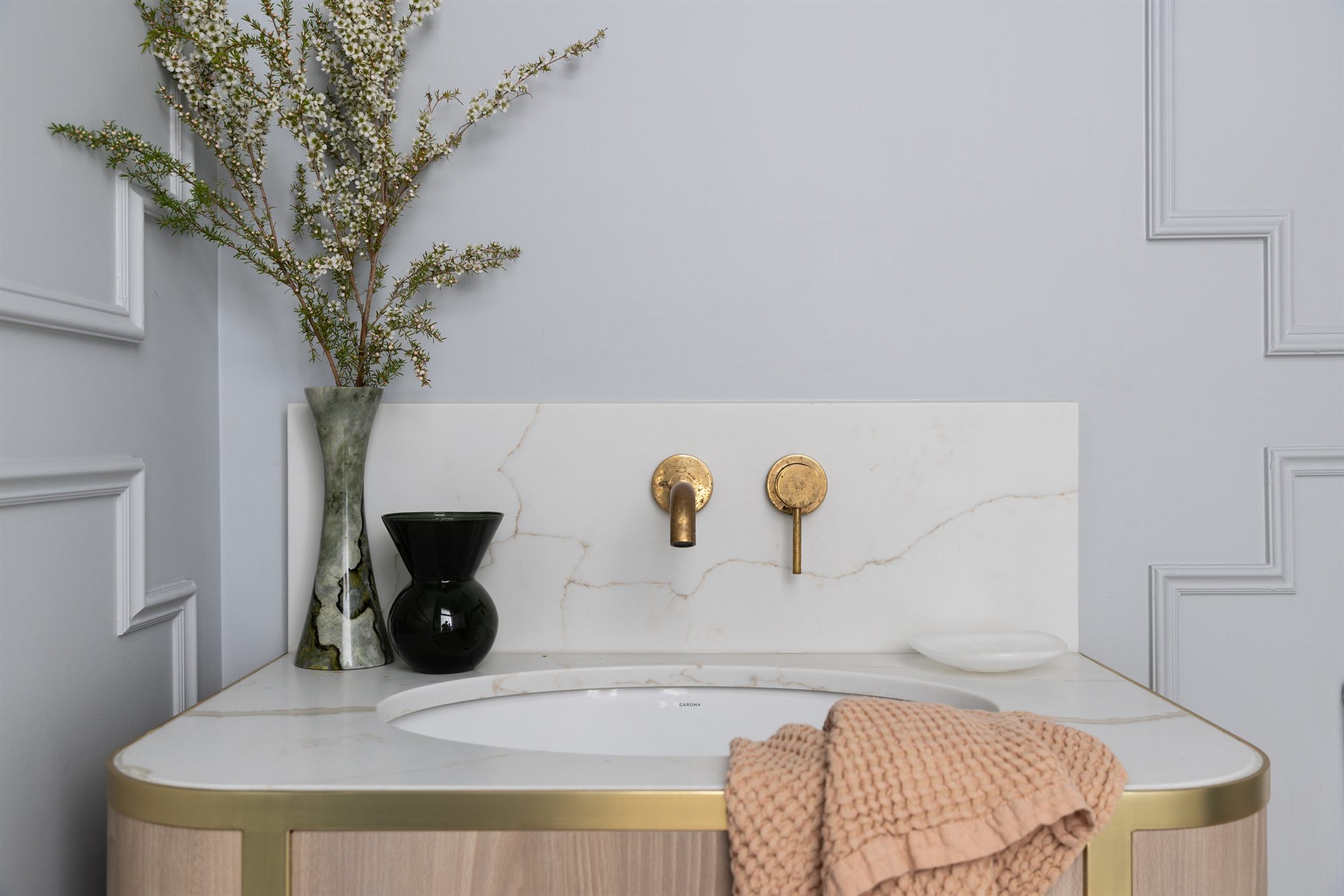
Try this: choose one metal finish as the lead and use it consistently, rather than mixing several in one room.
8. A restrained, cohesive palette
The most expensive-looking homes use a small family of colours and materials, repeated with intent. Three or four principal materials carried from room to room make a house feel designed rather than assembled. Warm whites, stone and timber, balanced by one or two deeper tones, let texture and art take the lead.
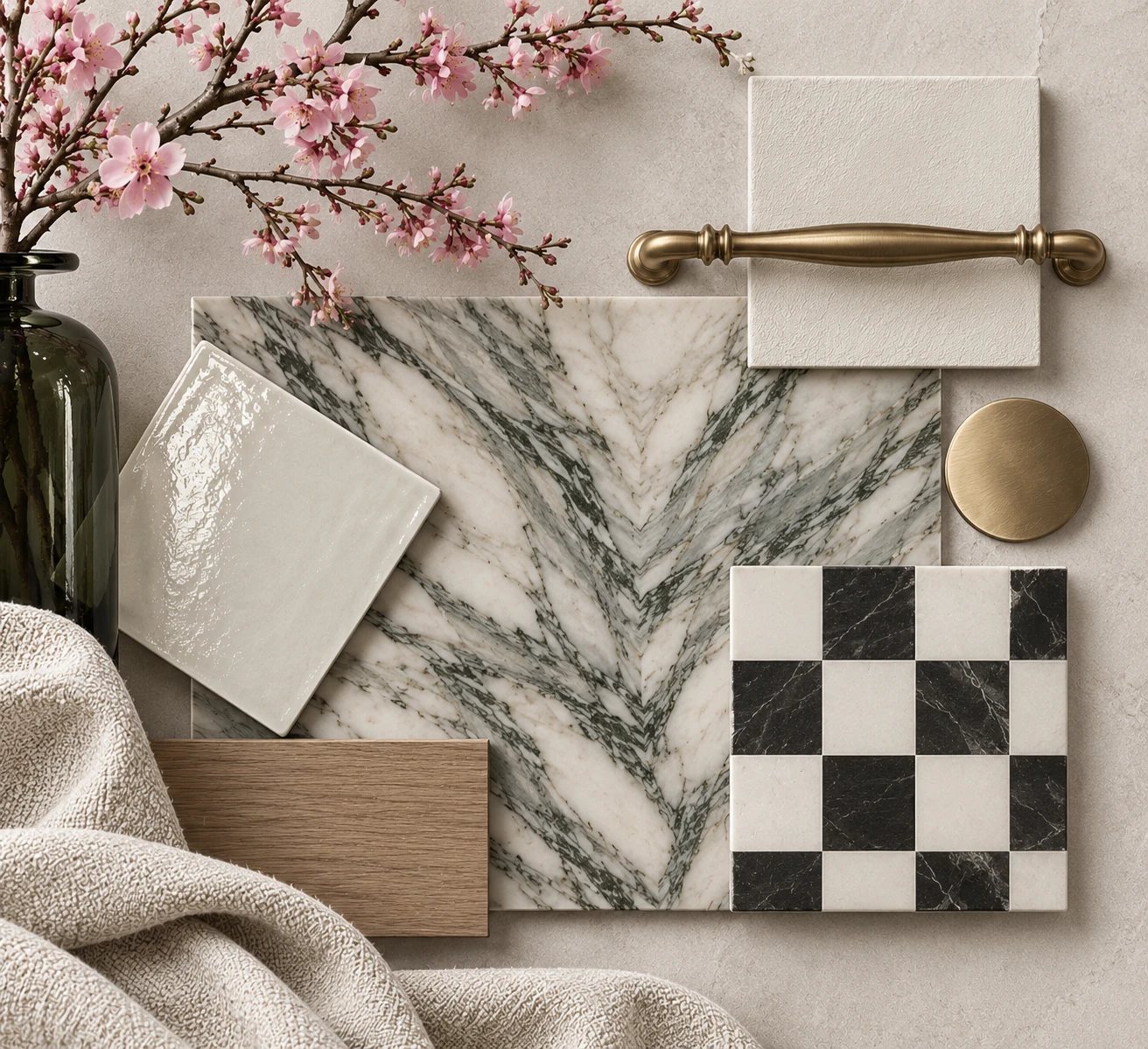
Try this: lay your main samples out together and remove anything that competes for attention.
The details
9. Custom joinery and hidden storage
Joinery that is built in, rather than added on, is one of the clearest signs of a well-designed home. Floor-to-ceiling cabinetry, integrated appliances and storage for everyday clutter keep surfaces clear and lines clean, so the architecture can be seen.
Try this: plan storage for the things that usually end up on benches, such as chargers, mail and small appliances.
10. Architectural detailing
Wall panelling, cornices, skirtings and architraves add depth and shadow, and they quietly signal craftsmanship. In contemporary homes, the same role is played by crisp shadow lines and precise alignments. What matters is that the detail is consistent and scaled to the room.
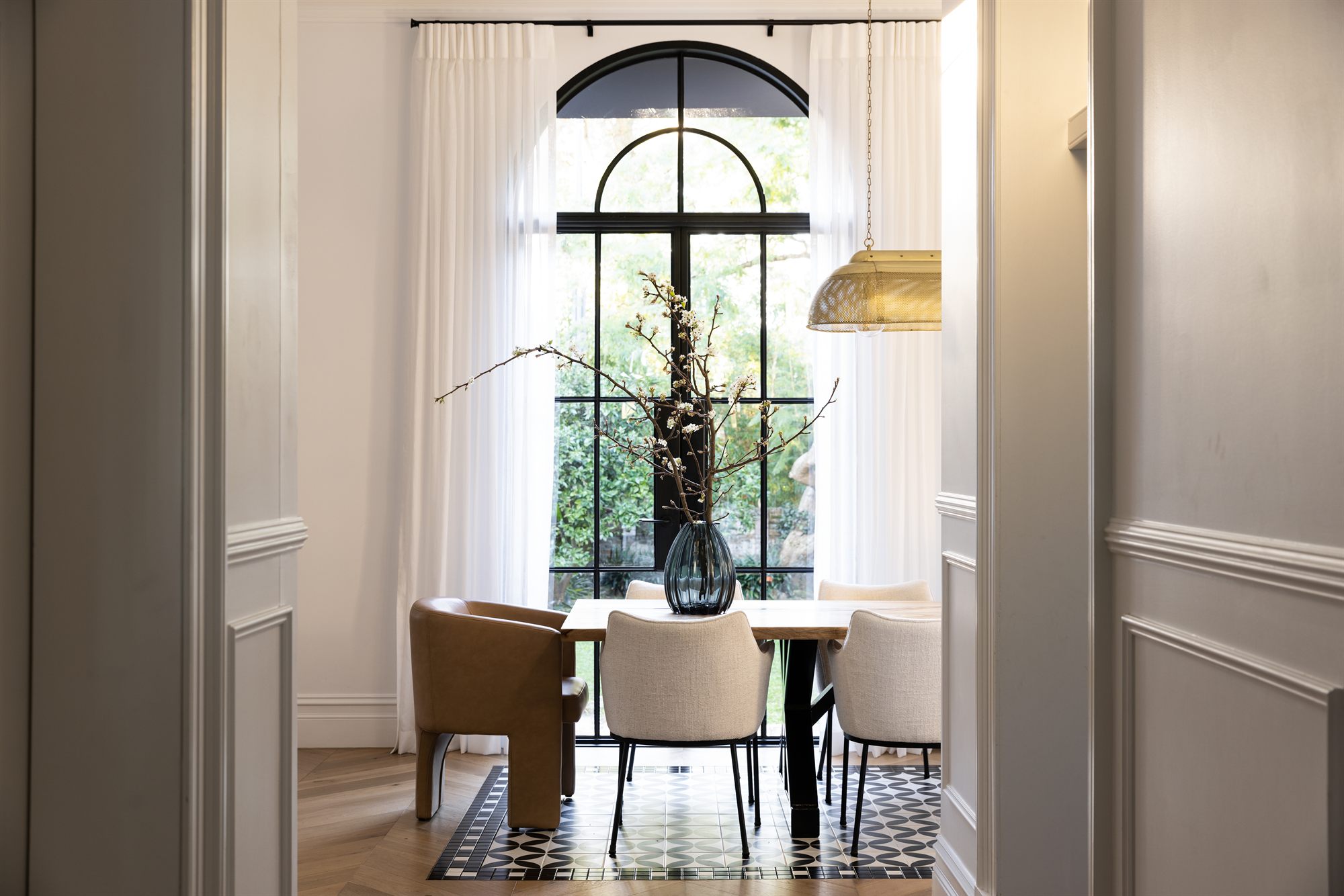
Try this: line up the things that are easy to overlook, such as switches, tile joints and joinery edges.
11. Touchpoints with weight
How a home feels in your hand is a big part of why it feels expensive. Solid doors that close with a soft, heavy sound, handles with some weight to them, smooth soft-close drawers and well-made switches are noticed every day, even if no one mentions them.
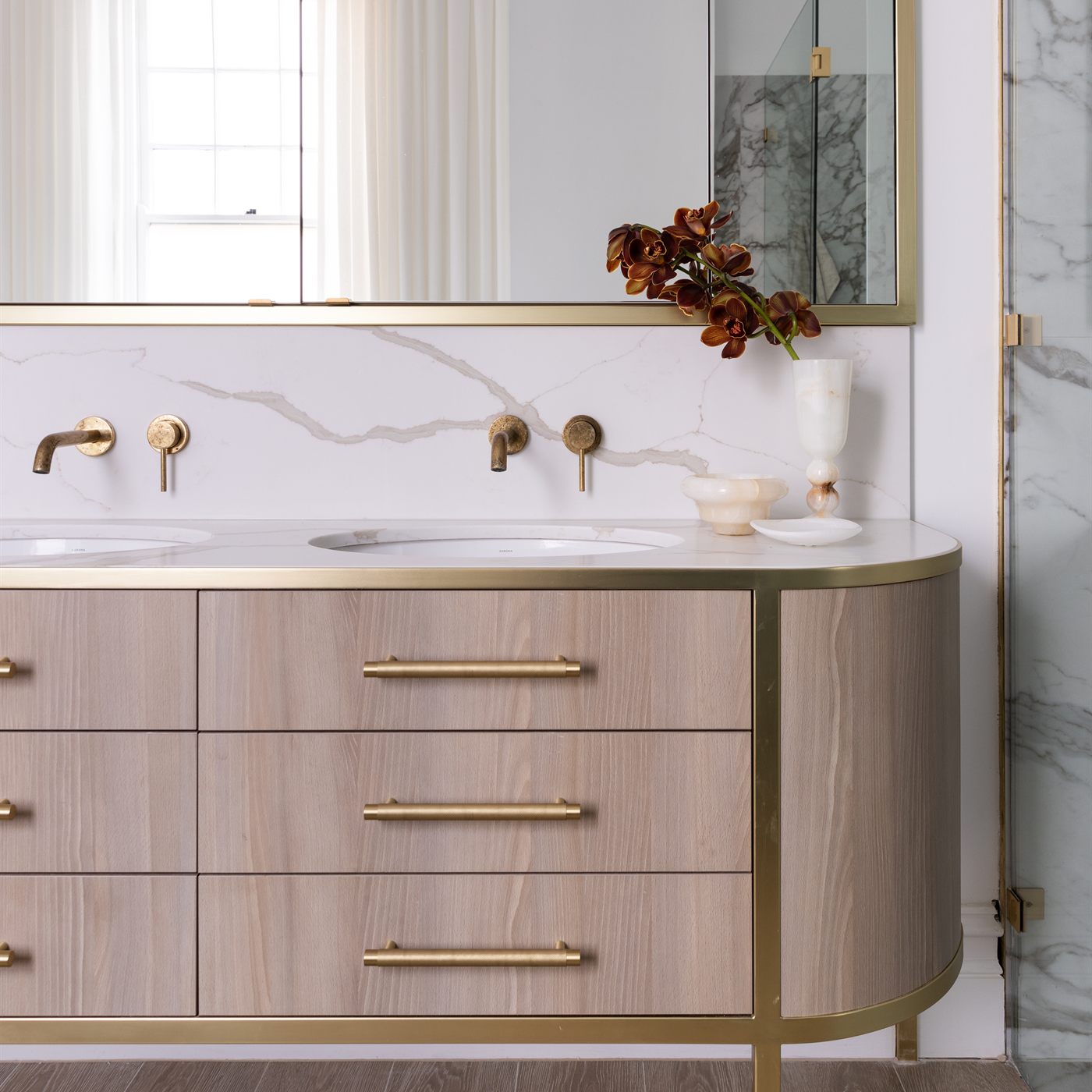
Try this: replacing tired door and cabinet hardware is one of the quickest ways to lift a home without renovating.
Furnishing and styling
12. Furniture at the right scale
Undersized furniture makes a room look unfinished. A generous sofa, a dining table with room to spare and a rug large enough for the front legs of every chair to sit on it make a room feel grounded. Fewer, better pieces, with space around them, read as more luxurious than a room full of smaller ones.
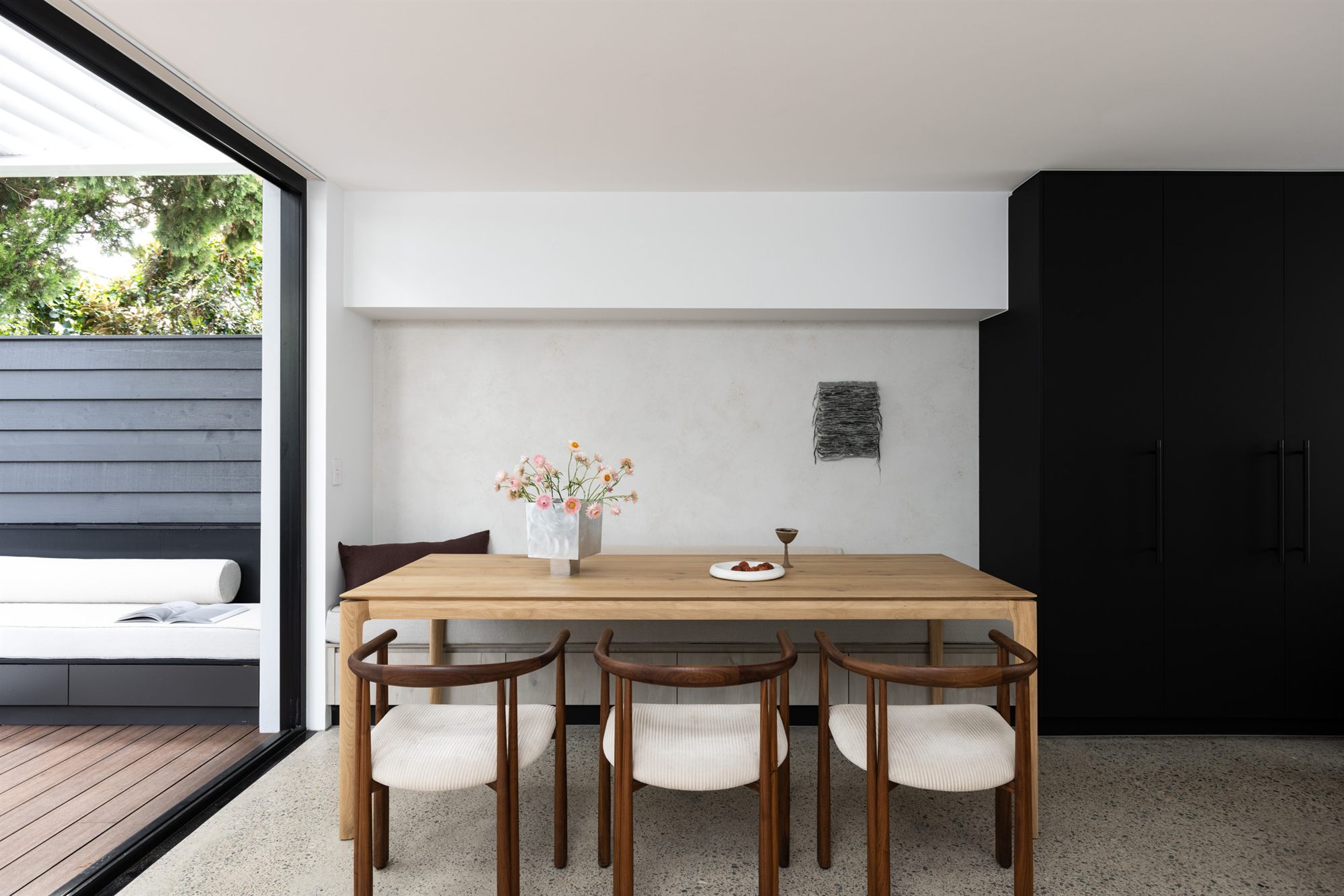
Try this: before buying, mark out large pieces on the floor with tape to check their scale.
13. Texture and layered textiles
Texture brings depth to a restrained palette and invites people to touch. Linen, wool, bouclé, velvet and leather, layered against stone and timber, make a room feel rich without adding more colour. Curtains, cushions, throws and rugs also soften sound, which makes a room feel calmer.
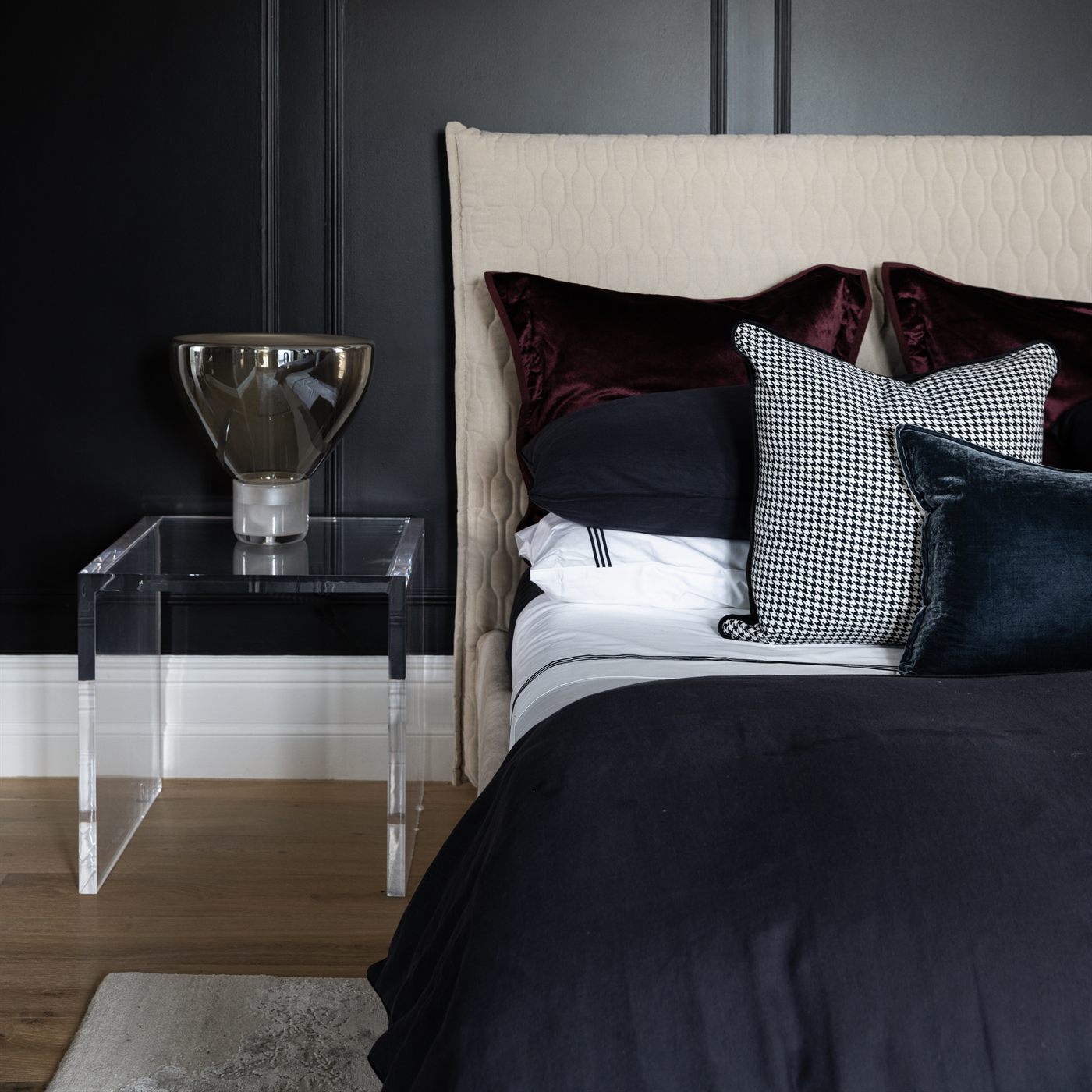
Try this: combine at least three textures in each room, such as something smooth, something nubby and something soft.
14. Original art and collected objects
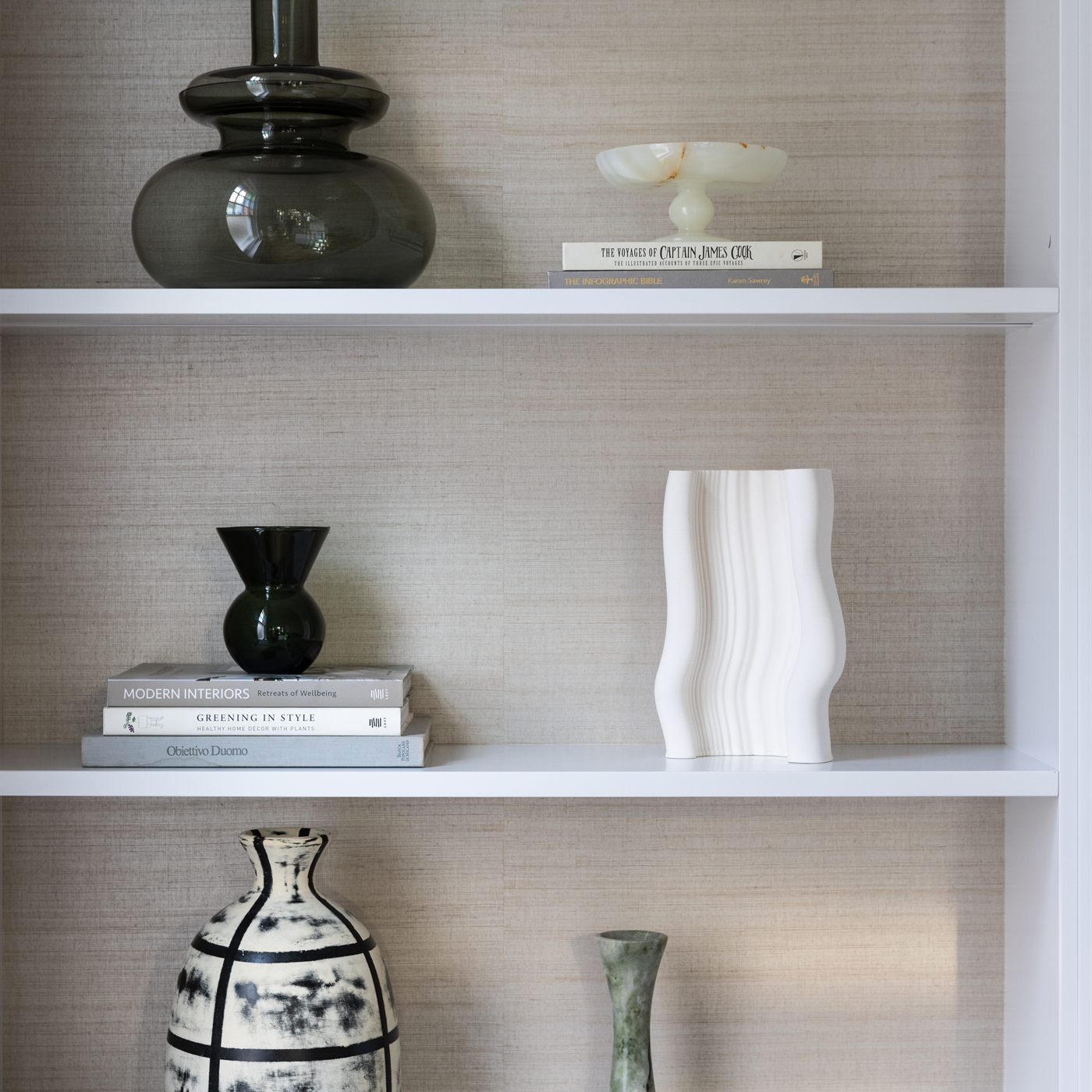
Art gives a home its personality, and nothing makes a room feel more considered. One significant piece, hung at a comfortable height with space around it, has more impact than many small prints. Objects collected over time, such as ceramics, books and vintage finds, add a story that new purchases can’t.
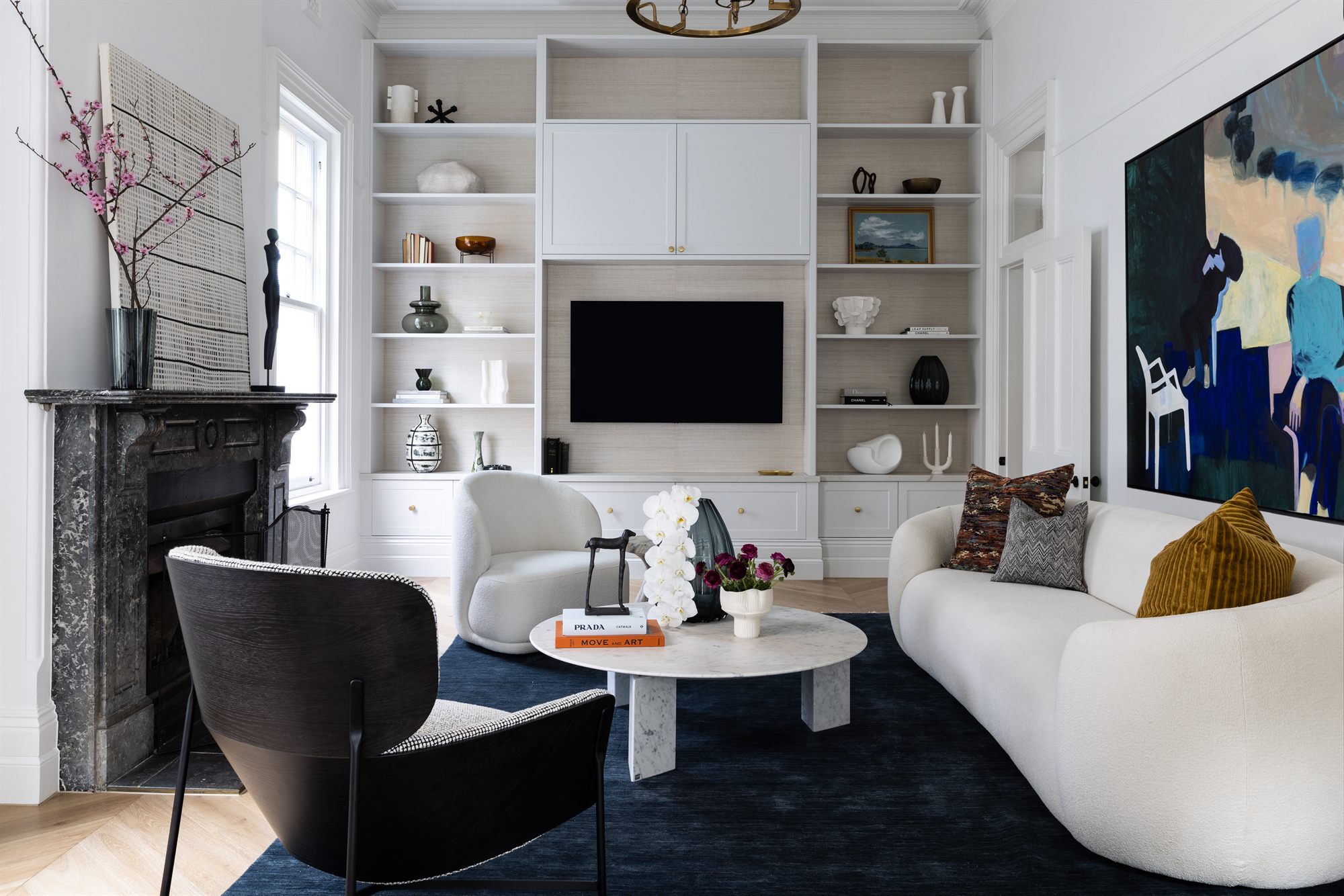
Try this: give your favourite piece of art its own wall, and consider a picture light so it’s seen at night.
15. A sense of calm
The final element is the one people feel most. An expensive-feeling home is quiet, comfortable and uncluttered. Clutter is stored away, rooms are comfortable in every season, soft furnishings absorb sound, and styling is edited so each object can be seen. A few branches or a simple bunch of flowers add life without fuss.
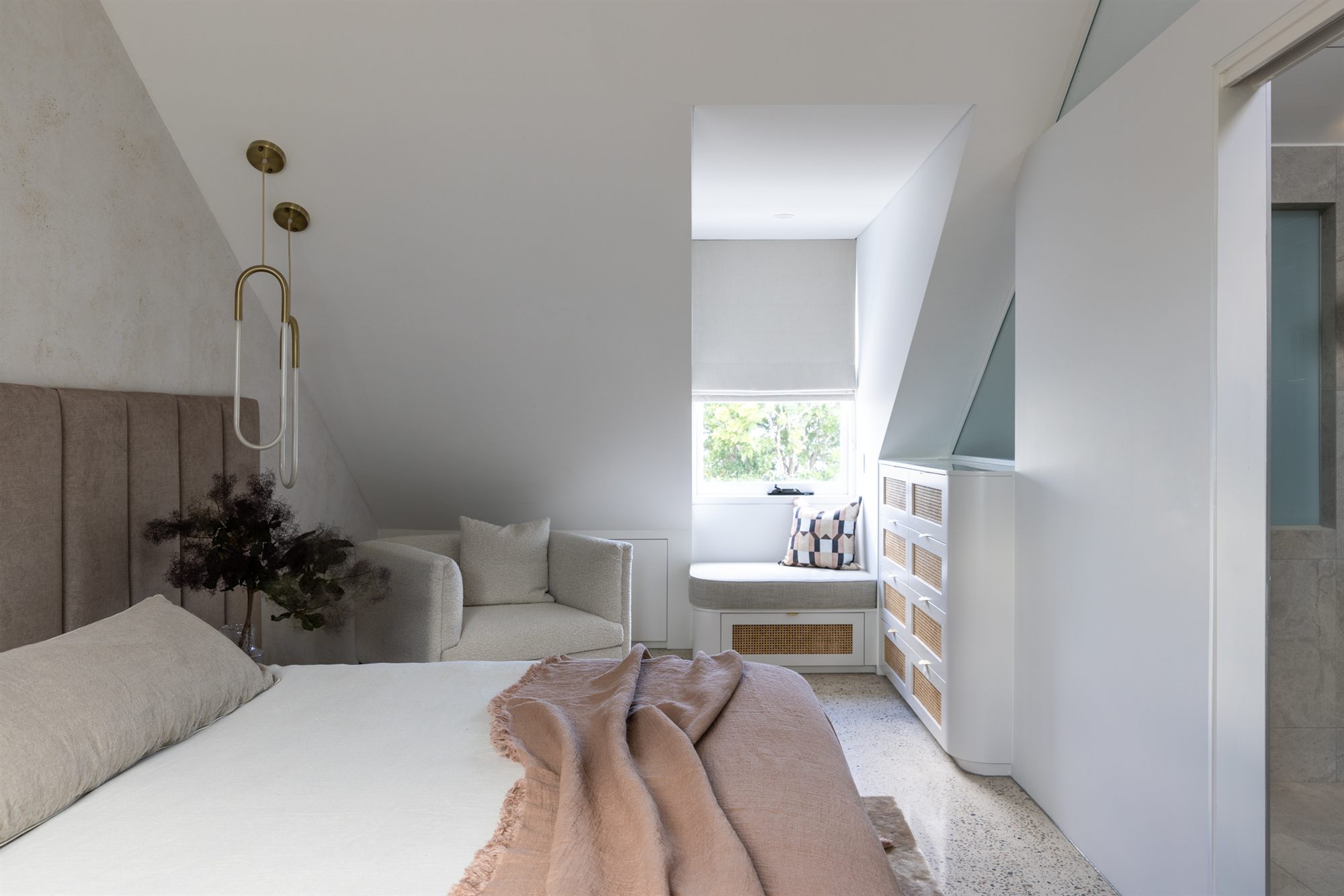
Try this: remove a third of the objects on your shelves and see how much more each remaining piece stands out.
What makes a home look cheap?
Often it’s not the budget but a handful of small decisions. The most common culprits we see are:
- One grid of downlights and no lamps or wall lights.
- Curtains hung too low or too short, stopping above the floor.
- Rugs that are too small, floating in the middle of the room.
- Too many competing finishes, with a different look in every room.
- Lightweight hardware and builder-grade fittings.
- Furniture bought as a matching set from one place, in one season.
- Visible clutter, cables and overfilled shelves.
- Trend-led finishes on fixed surfaces that date quickly.
Where to start, whatever your budget
We show clients exactly where the budget goes and why, so it lands on the details that matter most, such as joinery, lighting, stone and hardware.
| No building work needed | Best planned with a renovation or new build |
|---|---|
| Add lamps and wall lights, and use warm bulbs | Plan layered lighting and power from the start |
| Rehang curtains higher, wider and to the floor | Adjust openings, ceiling heights and window sizes |
| Choose a larger rug and fewer, better pieces | Lay continuous timber flooring |
| Replace door and cabinet hardware | Specify natural stone and quality tapware |
| Edit away clutter and give art space | Design custom joinery and integrated storage |
| Layer textures with cushions, throws and linen | Add panelling, cornices or shadow-line detailing |
If you’re planning a larger project, it helps to understand what an interior designer costs, and what they can save you.
How STUDIO BELLE creates homes that feel expensive
At STUDIO BELLE, our homes are authored, not decorated. One studio holds the pen from first plan to final styling, so every decision is resolved, buildable and made to hold its value.
Explore our work, or tell us about your project. We would love to explore what your home could become.
Share this article